

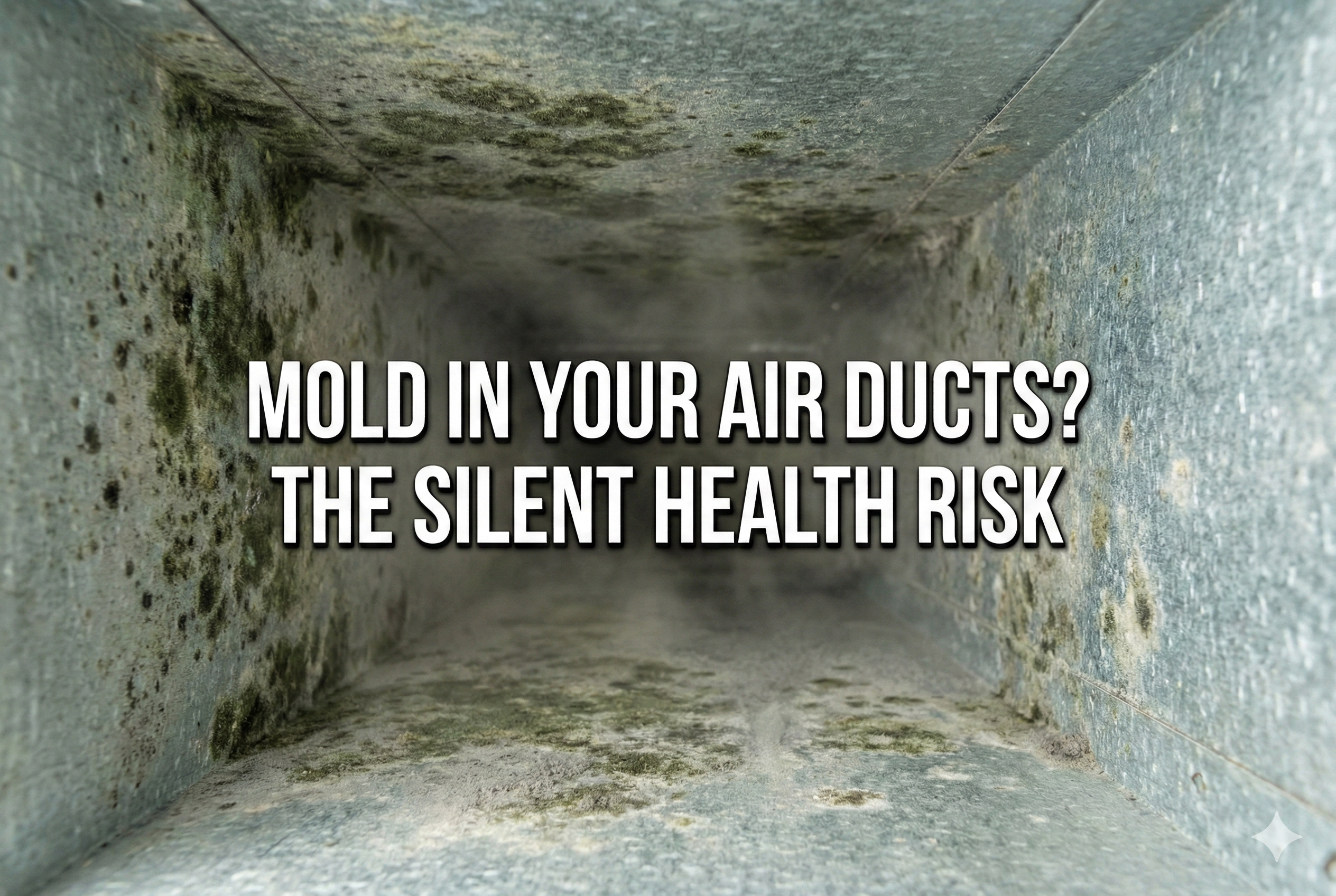
Mold in air ducts is one of the most serious issues a homeowner can face, turning a comfort system into a hazard that circulates harmful spores throughout the entire house. Unlike dust or pet hair, which are irritants, mold is a living organism that actively degrades your indoor air quality and poses genuine health risks to your family.
At The Duct Guyz, we specialize in not just cleaning vents, but treating the biological contaminants that hide inside them. We often receive calls from homeowners who have been battling chronic coughs or mysterious odors for months, only to discover that their HVAC system has been acting as a breeding ground for fungi. Here is everything you need to know about identifying, treating, and preventing mold in your ventilation system.
1. Why Does Mold Grow in HVAC Systems?
To grow, mold needs three things: a food source (dust), steady temperatures, and moisture. Unfortunately, your HVAC system can easily provide all three.
Condensation: In the summer, cold air moving through warm ducts (or vice versa) can create condensation. If your ducts aren’t properly insulated, this “sweat” collects inside.
The Food Source: The dust and dander that naturally accumulate in ducts serve as organic food for mold spores.
Darkness: Mold thrives in the dark, making the deep recesses of your ductwork the perfect nursery. Once mold in air ducts establishes a foothold, it releases spores every time the blower fan turns on, spreading the colony to other parts of the system and into your living rooms.
2. Identifying the Signs of Mold Growth
Since you cannot crawl inside your ducts, how do you know if you have a problem? There are specific tell-tale signs:
The “Dirty Sock” Smell: This is the most common indicator. If you smell a strong, musty, damp, or rotting odor when your AC kicks on, it is almost certainly microbial growth.
Visible Growth on Vents: Look closely at your ceiling or floor registers. If you see small black or green spots growing on the metal grates or the surrounding drywall, it is highly likely that the problem is much worse further up the line.
Unexplained Allergy Symptoms: If your family experiences watery eyes, rashes, throat irritation, or wheezing that worsens when the AC is running, your body might be reacting to mycotoxins in the air.
3. The Health Risks of Ignoring the Problem
Ignoring mold in air ducts is dangerous. While some molds are relatively harmless, others (like Stachybotrys chartarum, or black mold) can release mycotoxins. Prolonged exposure can lead to:
Chronic sinus infections.
Asthma attacks.
Fatigue and “brain fog.”
Severe allergic reactions in children and the elderly. If you suspect mold, this is not a “wait and see” situation. It requires immediate professional assessment.
4. Why DIY Bleach Cleaning Doesn’t Work
When homeowners see mold, their first instinct is often to grab a bottle of bleach and a sponge. Do not do this.
Surface Only: Bleach often only kills the surface mold on the vent cover, leaving the root structure alive in the porous drywall or insulation.
Corrosion: Harsh chemicals can corrode the metal of your HVAC components.
Inaccessibility: You cannot reach the mold growing 15 feet back in the main supply trunk. Professional remediation involves physical removal using agitation tools followed by the application of EPA-registered antimicrobial agents that are safe for your system but deadly to mold.
5. The Professional Remediation Process
When you hire The Duct Guyz for a mold issue, we follow a strict protocol:
Inspection: We use cameras to locate the extent of the growth.
Source Identification: We help identify why moisture is getting in (e.g., a leak or humidity issue) so the mold doesn’t return.
Deep Cleaning: We mechanically remove the mold-infested dust and debris.
Sanitization: We treat the entire system with an industrial-grade antimicrobial fog that coats the ductwork, neutralizing any remaining spores and inhibiting future growth.
6. Prevention is Key
Once your ducts are clean and mold-free, keep them that way by controlling humidity. Consider installing a whole-home dehumidifier and ensure your attic ductwork is properly insulated to prevent condensation. Changing your air filters regularly also reduces the “food source” available for potential mold colonies.
Breathe Safe Again
Don’t let your HVAC system compromise your health. If you suspect mold in air ducts, call the experts who know how to treat it safely and effectively.
Contact The Duct Guyz today for a specialized inspection.
📞 Call: (866) 712-1122 🌐 Visit: guyzvent.com 📧 Email: info@guyzvent.com
The Duct Guyz – Your Trusted Experts In Fresh Air.