

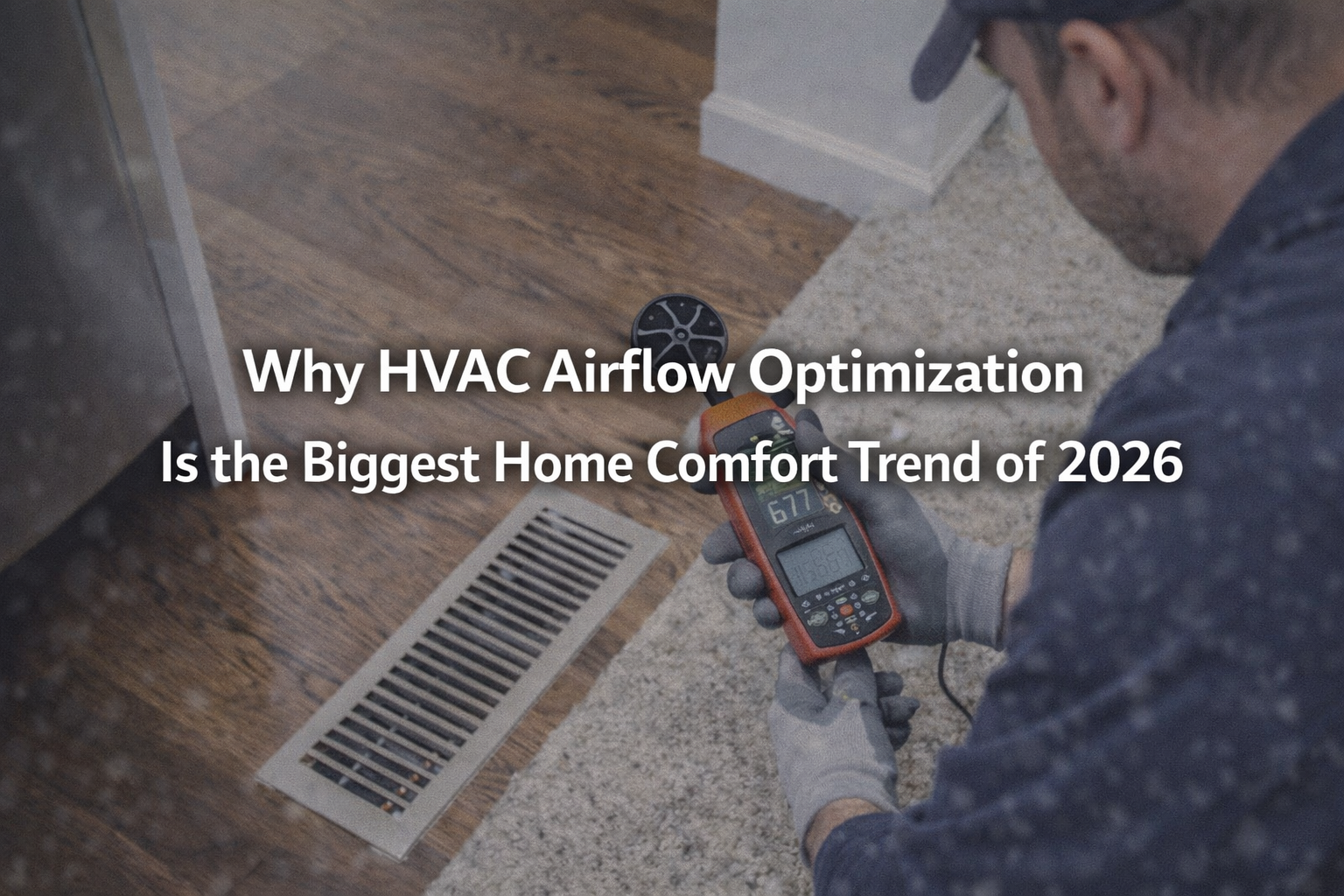
HVAC airflow optimization has quickly become one of the most talked-about home improvement trends in 2026—and for good reason. While many homeowners focus on upgrading thermostats or replacing HVAC units, poor airflow remains one of the biggest hidden causes of discomfort, rising energy bills, and uneven temperatures.
Even the most advanced HVAC system cannot perform efficiently if airflow is restricted, unbalanced, or improperly distributed. That’s why airflow optimization is now considered a foundational service for modern, energy-conscious homes.
What Is HVAC Airflow Optimization?
HVAC airflow optimization is the process of evaluating and improving how air moves through your heating and cooling system. This includes inspecting ductwork, vents, filters, returns, and system pressure to ensure air reaches every room evenly and efficiently.
Key components of airflow optimization include:
Correct duct sizing
Sealed and balanced ductwork
Clean vents and registers
Proper return air placement
Unrestricted airflow paths
When airflow is optimized, your HVAC system works smarter—not harder.
Why HVAC Airflow Optimization Is a Major Trend in 2026
Homeowners in 2026 are prioritizing comfort, efficiency, and long-term system performance. Several factors have pushed HVAC airflow optimization into the spotlight:
Rising energy costs
Increased awareness of indoor air quality
More remote and hybrid work lifestyles
Advanced HVAC diagnostics technology
Demand for consistent room-to-room comfort
Instead of replacing systems prematurely, homeowners are optimizing what they already have—and seeing impressive results.
Signs Your Home Needs HVAC Airflow Optimization
Poor airflow often goes unnoticed until comfort issues become impossible to ignore. Common signs include:
Hot and cold spots throughout the home
Weak airflow from vents
Rooms that never reach the set temperature
Excessive dust buildup
HVAC system running constantly
High utility bills with no clear explanation
If any of these issues sound familiar, HVAC airflow optimization may be the missing solution.
How Airflow Optimization Improves Energy Efficiency
When airflow is restricted, your HVAC system must work longer cycles to reach the desired temperature. This leads to wasted energy and unnecessary strain on components.
HVAC airflow optimization helps by:
Reducing system run time
Allowing air to circulate efficiently
Preventing pressure imbalances
Lowering heating and cooling costs
Supporting eco-friendly energy goals
In many cases, homeowners see noticeable energy savings without replacing their HVAC unit.
The Connection Between Airflow and Indoor Air Quality
Airflow plays a critical role in indoor air quality. When air isn’t circulating properly, pollutants settle in ducts, rooms, and living spaces.
Optimized airflow helps:
Reduce airborne dust and allergens
Improve filtration effectiveness
Prevent moisture buildup
Support healthier breathing environments
For families with allergies, pets, or respiratory sensitivities, HVAC airflow optimization can significantly improve daily comfort.
HVAC Airflow Optimization vs. HVAC Replacement
One of the biggest misconceptions homeowners have is assuming poor comfort means they need a new HVAC system. In reality, airflow issues are often the real culprit.
Airflow optimization is:
More affordable than full system replacement
Less invasive
Faster to implement
Highly effective when combined with maintenance
Many HVAC systems labeled “inefficient” simply aren’t delivering air properly.
What Professionals Check During Airflow Optimization
A professional HVAC airflow optimization service typically includes:
Airflow measurement at each vent
Duct leakage testing
Inspection for blockages or collapsed ducts
Evaluation of return air pathways
Filter condition assessment
These diagnostics allow technicians to make targeted improvements instead of guesswork.
How Often Should Airflow Be Evaluated?
Experts recommend HVAC airflow optimization:
Every 3–5 years
After renovations or remodeling
When adding rooms or insulation
If comfort issues develop
Before upgrading HVAC equipment
Regular evaluation ensures your system adapts to changes in your home.
Why Airflow Optimization Supports HVAC Longevity
Restricted airflow forces HVAC components to operate under stress, increasing wear and shortening lifespan. Optimized airflow reduces strain on:
Blowers and motors
Heat exchangers
Coils and compressors
This helps extend the life of your HVAC system and reduce unexpected breakdowns.
Final Thoughts: Airflow Is the Future of Home Comfort
HVAC airflow optimization is no longer a luxury—it’s a necessity in 2026. As homes become smarter and energy costs continue to rise, ensuring proper airflow is one of the most effective ways to improve comfort, efficiency, and indoor air quality.
By addressing airflow issues early, homeowners can enjoy consistent temperatures, cleaner air, and lower energy bills—without replacing their entire HVAC system.
 Call us today at (866) 712-1122 or visit guyzvent.com to schedule your professional air duct cleaning service.