

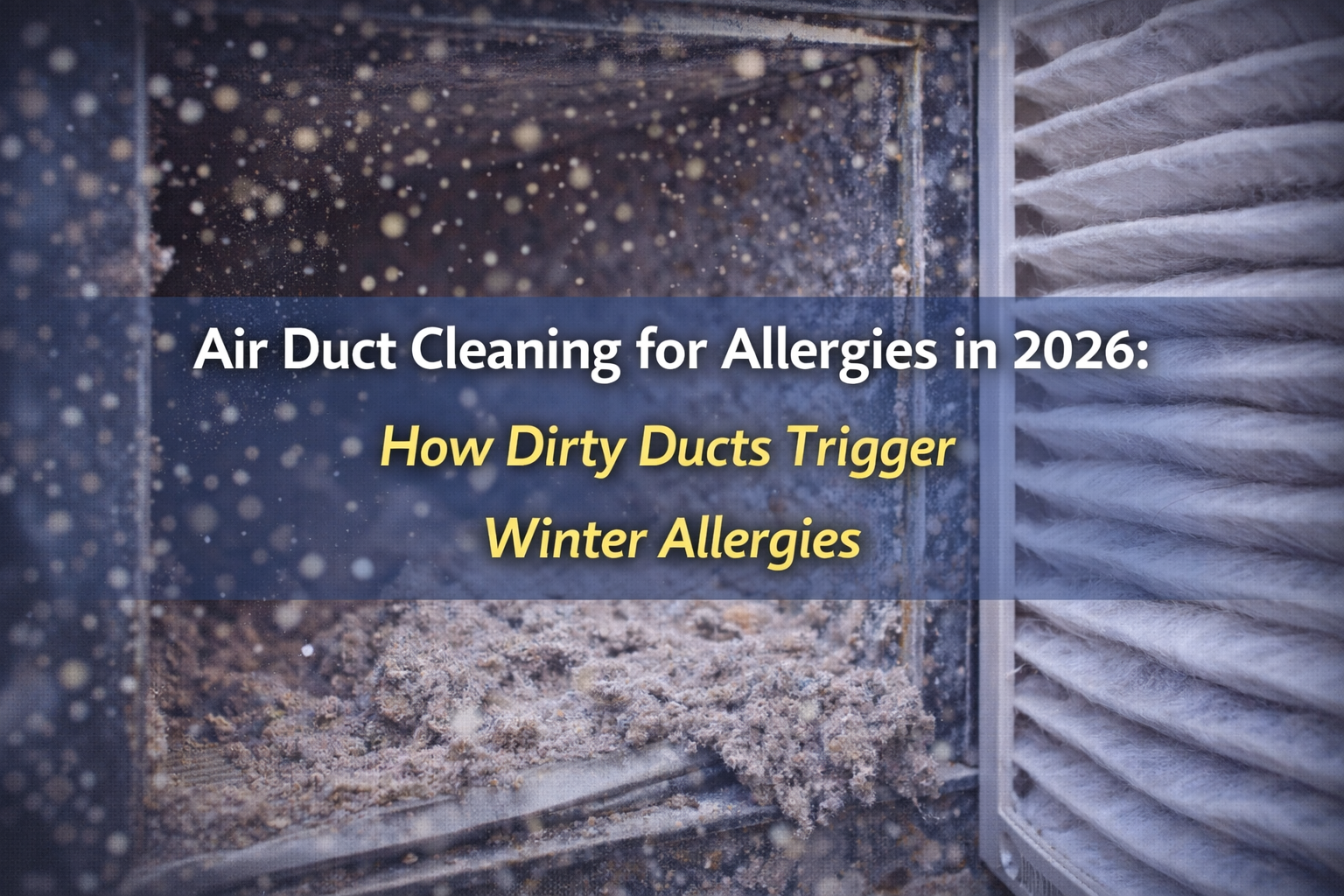
Air duct cleaning for allergies is becoming a top priority for homeowners in 2026 as winter allergy symptoms continue to rise. While allergies are often associated with spring, many people experience their worst symptoms during colder months. The reason isn’t outdoor pollen—it’s what’s circulating inside the home.
During winter, homes stay sealed, heating systems run constantly, and airborne allergens become trapped in ductwork. Every time warm air flows through dirty ducts, allergens are redistributed throughout living spaces, worsening allergy symptoms without homeowners realizing the source.
Why Winter Allergies Are Worse Than Seasonal Allergies
Winter allergies behave differently from spring allergies. Instead of pollen, the main triggers are indoor contaminants that build up over time.
Common winter allergy triggers include:
Dust mites and fine dust particles
Pet dander trapped in duct systems
Mold spores from hidden moisture
Pollen carried inside during previous seasons
Without proper air duct cleaning for allergies, these particles continue circulating daily.
How Dirty Air Ducts Spread Allergens
Air ducts act like highways for airborne particles. Over months and years, they collect dust, debris, and allergens that settle inside the system.
When heating systems turn on:
Dust becomes airborne
Allergens are pushed into every room
Symptoms worsen without visible warning
Even frequent household cleaning cannot remove contaminants hidden deep inside ductwork.
Signs Your Ducts Are Affecting Allergies
Many homeowners treat allergy symptoms without addressing the source. Dirty ducts often reveal themselves through subtle signs.
Watch for:
Sneezing or congestion only at home
Worsening symptoms at night
Excess dust on furniture
Musty or stale indoor air
Allergy flare-ups when heat turns on
These are strong indicators that air duct cleaning for allergies may be needed.
How Air Duct Cleaning Helps Allergy Sufferers
Professional air duct cleaning removes allergen buildup from inside the system, stopping constant recirculation.
Benefits include:
Reduced airborne allergens
Cleaner indoor air
Fewer allergy flare-ups
Improved breathing comfort
Better heating airflow
For families with children, seniors, or pets, this service provides noticeable relief during winter.
Winter 2026 Trend: Indoor Health First
In 2026, homeowners are prioritizing indoor health more than ever. With remote work, increased time indoors, and rising awareness of air quality, preventive duct cleaning has become a seasonal essential.
Why this trend is growing:
More allergy diagnoses
Increased time spent indoors
Awareness of hidden air contaminants
Focus on preventive home care
Air duct cleaning for allergies aligns perfectly with this health-first mindset.
How Often Should Allergy-Sensitive Homes Clean Ducts?
Homes with allergy sufferers should schedule duct cleaning more frequently than average.
Recommended frequency:
Every 2–3 years for standard homes
Every 1–2 years for allergy-prone households
After renovations or pet adoption
Winter is an ideal time because heating systems are actively circulating indoor air.
Additional Ways to Reduce Allergens Alongside Duct Cleaning
While air duct cleaning is key, combining it with simple habits improves results.
Helpful steps include:
Replacing air filters regularly
Vacuuming with HEPA filters
Keeping vents unobstructed
Managing indoor humidity levels
Together, these steps significantly improve allergy relief.
Final Thoughts: Breathe Easier This Winter
Air duct cleaning for allergies is one of the most effective ways to reduce winter allergy symptoms at the source. Instead of treating symptoms alone, removing allergens from your duct system stops them from circulating throughout your home.
As winter 2026 approaches, homeowners focused on health and comfort are turning to professional duct cleaning to create cleaner, safer indoor environments—especially for allergy sufferers.
 Call us today at (866) 712-1122 or visit guyzvent.com to schedule your professional air duct, dryer vent and HVAC cleaning service.